

Men’s Packing List for Europe: What to Pack in Any Season
Wondering how much clothing you actually need for a European vacation? This men’s packing checklist is a practical starting point for a 10–14-day trip.
The key is choosing versatile clothing you can mix and match. You don’t need 14 different outfits, especially if you plan to do laundry once during your trip.
Affiliate Disclaimer: Some links on this blog are affiliate links. This means that, at no additional cost, the author may earn a small commission if you purchase through these links. As an Amazon Associate, I earn from qualifying purchases.
Men’s Packing List for Europe: What to Pack for 10–14 Days
| Clothing & Essentials | What to Pack |
|---|---|
| T-shirts | 4–5 |
| Button-down shirts or polos | 2 |
| Jeans | 1 pair |
| Casual pants or chinos | 2 pairs |
| Shorts (summer) | 1–2 pairs |
| Sweater or fleece | 1–2 |
| Rain jacket | 1 |
| Underwear | 7 pairs |
| Socks | 7 pairs |
| Sleepwear | 1 set |
| Comfortable walking shoes | 1 pair |
| Dressier shoes or sandals | 1 pair |
| Sunglasses | 1 pair |
| Day bag | 1 |
| Toiletries and medications | As needed |
| Phone, charger, and power adapter | 1 each |
| Passport and travel documents | As required |
This checklist assumes you’ll have access to laundry at least once during your trip. If you don’t plan to do laundry, adjust the quantities of underwear, socks, and clothing accordingly.
Adjust this list for your destination, the season, and your planned activities. A summer trip to Italy will require different clothing than a December visit to Germany’s Christmas markets.
CT Tip: Choose two or three coordinating colors when planning your travel wardrobe. This makes it easier to mix and match clothing and create more outfits with fewer pieces. It’s especially helpful when traveling with only a carry-on suitcase.
Can You Pack for Two Weeks in Europe With Just a Carry-On?
Yes, many travelers can pack for two weeks in Europe with just a carry-on suitcase, especially if they choose versatile clothing and plan to do laundry.
Wear your bulkiest shoes and jacket on travel days, use packing cubes to organize clothing, and, whenever possible, limit yourself to two pairs of shoes.
Remember that European airlines may have different carry-on size and weight restrictions, so check your airline’s baggage allowance before departure.
What Clothes Should Men Pack for Europe?
When packing clothes for Europe, focus on comfort, versatility, and the weather you’ll encounter. Choose pieces that work together so you can create several outfits without overpacking.
Think about your itinerary, too. A day exploring Rome calls for different clothing than hiking in the Swiss Alps or dining in Paris.
The goal is to pack clothes that work for your activities while leaving room for souvenirs.
Shirts and Tops
Start with four or five comfortable T-shirts in coordinating colors. These work well for sightseeing, travel days, and layering when temperatures drop.
Add two button-down shirts or polos that can transition from daytime exploring to a nice dinner. Lightweight, breathable fabrics are especially useful for summer travel, while wrinkle-resistant materials make packing easier.
For cooler weather, include one or two sweaters or long-sleeved shirts. Merino wool is a good option because it’s breathable, helps regulate temperature, and can be worn multiple times between washes.

This cotton jersey shirt has the soft, weighty feel of your favourite tee, and the moisture-wicking and fast-drying properties of your favourite workout top.

This cotton jersey shirt has the soft, weighty feel of your favorite tee and your favorite workout top's moisture-wicking and fast-drying properties.

Impossibly soft jersey fabric makes downtime irresistible.

This effortless button-up comes wrinkle-free straight out of the dryer, made from easy-care fabric, and updated with a more generous classic fit.

It's your everyday button-up but technical. Breathable, quick-drying fabric stands up to hot, go-go-go days.

Basically a hole-in-one. This polo, powered by our anti-stink technology, keeps you cool and comfortable on the course or wherever your day takes you.
CT Tip: Choose shirts that work with more than one pair of pants. This makes it easier to put together outfits without packing extra clothing.
Pants and Shorts
For a 10–14-day Europe trip, I recommend packing three pairs of pants: one pair of jeans and two pairs of chinos or comfortable travel pants.
Dark jeans are versatile for sightseeing and casual dinners. Chinos or travel pants with a little stretch are useful for long travel days, especially when you’re spending hours on trains or walking around European cities.
If you’re visiting Europe during warmer months, add one or two pairs of shorts. Lightweight, quick-drying fabrics are especially practical for destinations like Italy, Greece, and Malta.
For nicer restaurants or evening activities, a pair of well-fitting dark trousers can work with a button-down shirt without requiring an entirely separate outfit.
CT Tip: Before packing, think about where you’ll be eating and what activities you’ve booked. You probably don’t need formal clothing unless your itinerary includes a restaurant, event, or experience with a specific dress code.

Welcome to the all-day comfort club. Streamlined yet technical, these shorts elevate any look.

Office—and weekend—appropriate
Sleek pockets and easy-care fabric mean these trousers never look out of place.

An agile upgrade on dress pants, to move with confidence and comfort.
Best Shoes to Pack for Europe
Comfortable walking shoes are one of the most important things to pack for Europe. Between cobblestone streets, uneven sidewalks, museums, and sightseeing, you may spend hours on your feet each day.
I recommend bringing two pairs of shoes for most European trips:
- Comfortable walking sneakers: Choose a pair you’ve already worn for full days of walking. Look for cushioning, support, and a comfortable fit.
- A second versatile pair: Depending on your itinerary, this might be dressier sneakers, loafers, or sandals for warmer destinations.
If you’re visiting Europe in winter, consider waterproof boots with good traction, especially for Christmas markets or destinations where snow and ice are possible.
For summer trips to Italy, Greece, or Malta, comfortable sandals work well for beaches, pool days, and casual outings. Just make sure they suit the activities you have planned.
CT Tip: My husband is loyal to ECCO and OluKai shoes. He wears his ECCO Soft 7 sneakers for both work and European travel, and he also loves his OluKai Punini Everyday Sneakers. Both are favorites in his travel wardrobe.
For warmer destinations, he prefers OluKai sandals. A few tried-and-true styles make packing easier because he already knows which shoes work for him.
My advice? Don’t experiment with brand-new shoes on a European vacation. Bring shoes you’ve worn comfortably for long days of walking.

The ECCO Men's Soft 7 City Sneakers combine sleek leather styling with lightweight cushioning and supportive comfort, making them ideal for long sightseeing days and exploring European cities. Removable cushioned insoles, flexible soles, and anatomical arch support provide all-day comfort, while their versatile design transitions easily from sightseeing to dinner.

The OluKai Men's Punini Sneakers combine classic retro styling with breathable mesh, premium suede, and cushioned arch support for all-day comfort. Their signature Drop-In Heel allows them to convert from sneakers to slides, while grippy rubber soles provide reliable traction, making them a versatile choice for travel, sightseeing, and everyday wear.

THE ULTIMATE BEACH SANDAL
WATER-RESISTANT & QUICK-DRY: Beach sandals, flip-flops, and slides all come together with comfort and style in the Ohana sandal, featuring water-resistant synthetic straps with ultra-soft, quick-drying jersey knit lining and a soft nylon toe post for that ultra-comfy fit.

The HOKA Men's Clifton 10 Running Shoes offer lightweight, plush cushioning and breathable comfort, making them ideal for long sightseeing days, walking, and everyday running. Their supportive heel design, smooth heel-to-toe transitions, and durable rubber soles help keep your feet comfortable as you explore for miles.

The KEEN Men's Newport H2 Water Sandals combine sandal comfort with hiking-shoe protection. Featuring quick-drying materials, protective closed toes, cushioned arch support, and grippy rubber soles, they're perfect for hiking, water activities, and outdoor adventures. They're also machine washable for easy cleaning.

These lightweight suede hiking boots combine comfort, durability, and waterproof protection for outdoor adventures. Seam-sealed construction keeps feet dry, while responsive cushioning and grippy rubber soles provide support and traction on uneven terrain.
Jackets and Outerwear for Europe
The right jacket depends on when and where you’re traveling. Europe’s weather varies considerably by region, and even summer trips can include cool evenings or unexpected rain.
For most trips, I recommend bringing a lightweight, packable rain jacket. It’s useful for sightseeing, day trips, and unpredictable weather, and it takes up little space in your suitcase.
For spring and fall: Bring a lightweight jacket or windbreaker that you can layer over a sweater. This works especially well when temperatures change throughout the day.
For summer: A lightweight rain jacket is usually enough for warmer destinations, but bring an extra layer if you’re visiting northern Europe or higher elevations.
For winter: Pack a warm, insulated coat suited to your destination’s temperatures. Add gloves, a scarf, and a hat for colder weather. If you’re visiting European Christmas markets, remember that you’ll likely spend several hours outside, often after sunset.
CT Tip: Check the weather for every destination on your itinerary before packing. If you’re traveling between countries, don’t assume temperatures will be similar. Layering gives you more flexibility without requiring a different jacket for every stop.

Perfect for light to moderate rain, this jacket features Omni-Shield™ technology to repel moisture and resist stains. With an adjustable hood that tucks into the collar, zippered pockets, and adjustable cuffs, it packs neatly into its own pocket for easy travel.

Designed to keep you dry in wet weather, this jacket features waterproof, breathable Omni-Tech™ Eco technology made with recycled and plant-based materials. Fully sealed seams, adjustable hood and hem, and a water-resistant zipper provide extra protection, while zippered pockets keep essentials secure.

Stay warm and comfortable on cold, damp days with Omni-Heat™ reflective lining and lightweight recycled insulation that retains warmth even when wet. Water-resistant, stain-repellent fabric, an adjustable hood and hem, and elastic cuffs provide extra protection from the elements.

4-point beanie construction, crafted from soft acrylic yarn

Stretch fit for comfort with a silicone palm for grip
Touchscreen-compatible thumb and fingertips let you use your phone without removing gloves

Sharp look, soft feel. This sueded utility jacket combines a sleek cut with a cozy lining and a fleece collar.

Travel Accessories and Organization Essentials for Europe
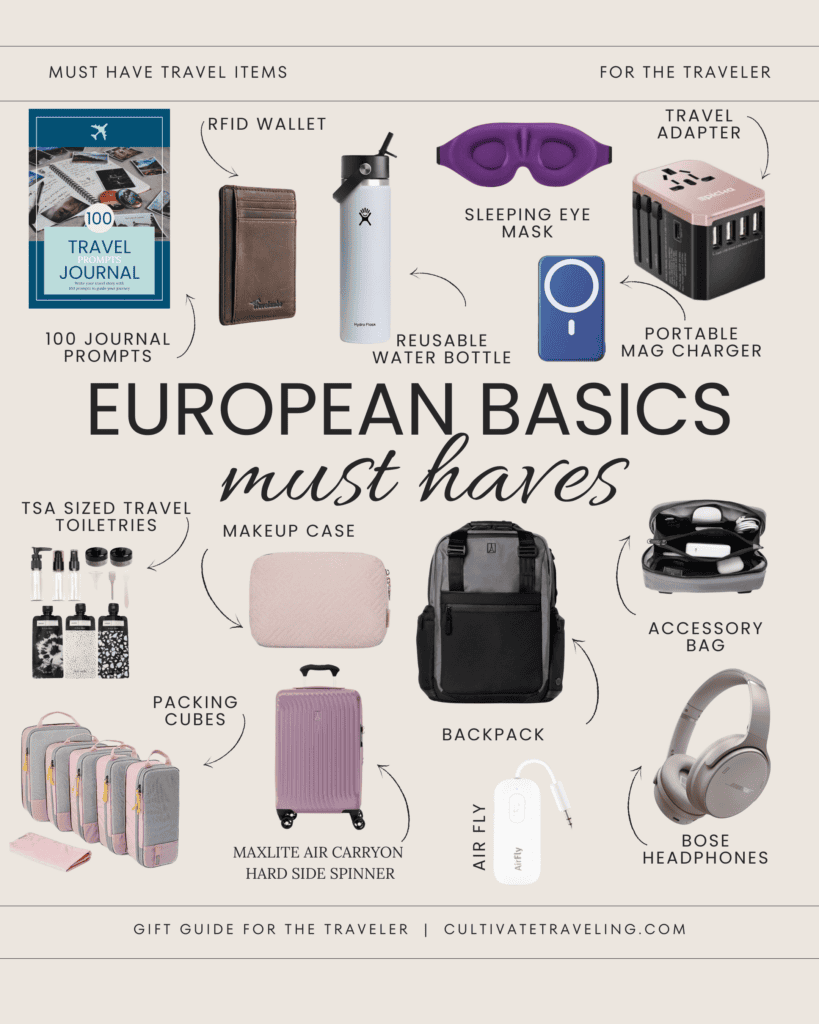
Packing the right travel accessories can make your European vacation much easier, especially when you’re moving between cities, taking trains, or exploring all day.
You don’t need every travel gadget available. Focus on a few practical items to stay organized, comfortable, and prepared.
Essential Travel Accessories for Men
- Packing cubes: Keep shirts, pants, and underwear organized so you can find what you need without unpacking your entire suitcase.
- Lightweight day bag: Carry your water bottle, sunglasses, portable charger, and other sightseeing essentials.
- Reusable water bottle: Stay hydrated during long sightseeing days. A collapsible bottle can save space when you’re not using it.
- Compact umbrella: Useful for unexpected rain, particularly when visiting several European destinations with different weather conditions.
- Laundry bag: Keep dirty clothes separate from clean clothing.
- Foldable tote bag: Handy for groceries, souvenirs, or carrying an extra layer.
- Luggage tracker: An Apple AirTag or compatible tracker can help you locate your suitcase if you misplace it.
- Travel wallet or document organizer: Keep essential travel documents and payment cards accessible without carrying everything in one place.
CT Tip: I use packing cubes to keep our luggage organized, especially when we’re visiting several destinations on the same trip. I also recommend placing your contact information inside your suitcase in case the outside luggage tag gets lost.
After a London hotel temporarily misplaced our luggage, I started putting AirTags in our bags. They’re now part of my regular packing routine.
What Should You Keep in Your Day Bag?
For sightseeing, I recommend keeping your day bag lightweight. Bring only what you’ll need while you’re out exploring.
My suggested essentials include:
- Phone and portable charger
- Credit card and some cash
- Sunglasses
- Reusable water bottle
- Compact umbrella or lightweight rain layer
- Any medications needed during the day
- Tickets or reservations you may need to show
CT Tip: Keep a backup credit card and some emergency cash separate from your everyday wallet. If you lose or have your wallet stolen, you won’t be left without another way to pay.
For passports and other important paperwork, see my Europe Travel Documents Checklist.
What to Pack in Your Personal In-Flight Travel Kit
For long-haul flights to Europe, I recommend keeping a small travel kit in your personal bag with the essentials you might need during the flight.
My husband carries his own in-flight kit, but he keeps it simpler than mine. He skips items like lotion, lip balm, and a comb.
Some useful items to consider include:
- Toothbrush and travel-sized toothpaste
- Eye mask and earplugs
- Hand sanitizer or sanitizing wipes
- Any medications needed during the flight
- Tissues
- Other personal comfort items you regularly use
CT Tip: Keep your in-flight essentials in a small pouch inside your personal bag so you can reach them without opening your carry-on suitcase in the overhead bin. Customize your kit to your own routine rather than packing items you won’t use.
Electronics and Technology for European Travel
A few well-chosen electronics can make navigating Europe much easier. From finding your way through unfamiliar cities to keeping your travel documents accessible, your phone will likely be one of your most-used travel tools.
Essential Electronics to Pack for Europe
- Smartphone: Use it for maps, train tickets, restaurant reservations, photos, and communication.
- Portable charger or power bank: Keep your phone charged during long sightseeing days.
- Universal travel adapter: European countries use different outlet types, so check which plugs you’ll need for your itinerary.
- Charging cables: Bring the cables you need for your phone, watch, headphones, and other devices.
- Noise-canceling headphones: Useful for long flights, train rides, and noisy environments.
- AirFly Bluetooth adapter: Connect compatible wireless headphones to an airplane’s entertainment system.
- Tablet or e-reader: Optional, but useful for entertainment during flights and train journeys.
- eSIM: Stay connected without relying entirely on public Wi-Fi.
CT Tip: I learned the importance of carrying a portable charger when my phone ran out of battery while exploring York, England. Now, I put a charged power bank in my day bag first.
Set Up Your eSIM Before Traveling to Europe
I recommend arranging your international phone service before leaving home rather than waiting until you arrive in Europe.
We use Airalo eSIMs when traveling internationally. Depending on the plan, you can install your eSIM before departure and activate it according to the provider’s instructions.
Before your trip:
- Confirm that your phone supports eSIMs and is carrier-unlocked.
- Choose a plan that covers every country on your itinerary.
- Check when the plan’s validity period begins.
- Follow the provider’s instructions to install and activate it.
- Download offline maps and important travel confirmations.
Remember that some eSIM plans provide data only. You can use apps such as WhatsApp for calls and messages over an internet connection. Businesses in Europe commonly use WhatsApp to communicate.
CT Tip: Set up your eSIM and download your travel apps before leaving home. I also save important reservations and directions offline so I don’t have to depend entirely on having a reliable connection.
Do You Need a Power Adapter or Voltage Converter in Europe?
Most travelers will need a plug adapter to connect U.S. devices to European outlets. However, a travel adapter does not convert voltage.
Many modern phone chargers and laptop power supplies support both U.S. and European voltages, but check the input specifications on each device.
If an appliance isn’t compatible with the local voltage, an ordinary plug adapter won’t make it safe to use.
Travel insurance is essential for protecting yourself against unexpected events like trip cancellations, medical emergencies, or lost luggage. It provides peace of mind, ensuring you’re financially covered in case plans go awry, letting you focus on enjoying your trip.
We recommend using AXA Partners or Safety Wing for travel insurance.

Toiletries and Personal Care Essentials for Men
When packing toiletries for Europe, keep things simple. Bring the products you use at home, choose travel-sized containers when possible, and avoid packing items you probably won’t need.
Men’s Toiletries Packing Checklist
- Toothbrush, toothpaste, and dental floss
- Deodorant
- Shampoo and body wash, if needed
- Razor and shaving products
- Sunscreen
- Prescription medications
- Contact lenses and solution, if applicable
- Basic first-aid supplies
- Hand sanitizer
- Comb
- Any other personal care products you use regularly
Depending on your routine, you may also want moisturizer, lip balm, or other grooming products. There’s no need to pack them if you don’t use them.
Keep a Toiletry Kit Ready for Travel
A compact toiletry or dopp kit makes packing easier and keeps your grooming products in one place.
My husband carries a travel kit with his regular essentials, but he keeps it simple. The best toiletry kit matches what you actually use, not a long list of products someone else thinks you should bring.
CT Tip: Keep your regular travel toiletries together in a dedicated kit. Before each trip, check quantities, expiration dates, and anything that needs replacing. It’s much easier than starting from scratch every time.
Medications and First-Aid Essentials
Pack prescription medications in your carry-on or personal bag, along with a few basic first-aid items.
Consider bringing:
- Blister bandages for long walking days
- Pain relievers you normally use
- Motion-sickness medication, if needed
- A few adhesive bandages
- Any personal medications or medical supplies
Check the medication rules for the countries you’re visiting, especially for prescription or controlled medications.
CT Tip: European pharmacies can be excellent places to pick up forgotten toiletries. I’ve discovered skincare products in Italian pharmacies while traveling. However, I still recommend bringing enough of your favorite or specialty products from home, especially anything you rely on daily.
Book Lodging
Elevate your travel experience by reserving the ideal accommodation with Booking.com. Discover a range of hotels that suit your preferences, including location and budget.
Plan your Bucket List Activities
Discover the beauty of your travel destination through guided tours and activities available on Viator. Immerse yourself in the local culture and history.
Rent Your Car
Discover Cars delivers hassle-free car rental solutions, allowing you to explore your destination at your leisure. Embrace the freedom to travel and find hidden treasures along the way.
Optional Travel Extras
Depending on your itinerary and travel style, these extras may be worth packing:
- Compression bags: Useful for bulky clothing, although they don’t reduce luggage weight.
- Travel laundry kit: A few detergent sheets can make washing small items easier during longer trips.
- Eye mask and earplugs: Helpful for overnight flights and hotel stays.
- Travel pillow: Consider one for long-haul or overnight flights.
- Small notebook or journal: Useful for recording travel memories, notes, or important information.

Men’s Europe Packing List by Season
What you pack for Europe depends on the time of year and the destinations you’re visiting. A summer vacation in Italy requires different clothing than a winter trip to Germany’s Christmas markets.
Europe’s weather varies considerably by region, so check the forecast for each destination before you leave. If you’re visiting several countries, plan for the coolest and wettest conditions you expect to encounter.
Here’s a quick comparison of what men should pack for Europe in each season.
| Clothing | Summer | Spring & Fall | Winter |
|---|---|---|---|
| Shirts | Lightweight T-shirts, polos, linen shirts | T-shirts, long-sleeve shirts | Long-sleeve shirts, thermal base layers |
| Pants | Lightweight chinos, jeans | Jeans, chinos, travel pants | Warm pants, jeans, thermal layers |
| Shorts | 1–2 pairs | Optional for warmer destinations | Usually unnecessary |
| Sweaters | Light layer for cool evenings | Sweater or fleece | Merino wool sweater or fleece |
| Jacket | Lightweight rain jacket | Waterproof jacket or windbreaker | Insulated winter coat |
| Shoes | Walking sneakers, comfortable sandals | Walking sneakers, water-resistant shoes | Waterproof boots with good traction |
| Accessories | Sunglasses, sun hat | Compact umbrella, light scarf | Gloves, warm hat, scarf |
Men’s Summer Packing List for Europe
Summer in Europe can mean hot afternoons, crowded sightseeing attractions, and plenty of walking. Choose lightweight, breathable clothing to keep you comfortable all day.
For destinations like Italy, Greece, Spain, and Malta, prioritize:
- Lightweight T-shirts and polos
- Linen or breathable button-down shirts
- Comfortable shorts and lightweight chinos
- Supportive walking sneakers
- Sandals for beaches and casual activities
- Sunglasses, sunscreen, and a sun hat
Bring a lightweight layer for air-conditioned trains, cooler evenings, or higher-elevation destinations.
CT Tip: Even during summer, I recommend bringing at least one pair of long pants. They’re useful for nicer dinners, cooler evenings, and visiting religious sites that require more coverage.

What to Pack for Europe in Spring and Fall
Spring and fall can be wonderful times to explore Europe, but the weather is often unpredictable. You might enjoy a sunny afternoon, then a chilly, rainy evening.
Layers are especially important during these seasons.
Pack a mix of:
- Short- and long-sleeved shirts
- Jeans or comfortable travel pants
- A sweater or lightweight fleece
- A waterproof or water-resistant jacket suited to the forecast
- Comfortable walking shoes
- A compact umbrella
If you’re visiting several destinations, choose layers you can add or remove throughout the day rather than packing a different outfit for every possible temperature.
CT Tip: Don’t rely on the season alone when planning your wardrobe. London in October can feel very different from Rome in October. Check each destination’s forecast and adjust your layers accordingly.

Men’s Winter Packing List for Europe
Winter packing requires a little more planning, especially if you’re visiting northern Europe, the Alps, or European Christmas markets.
You’ll want clothing that keeps you warm while allowing you to spend several hours sightseeing outdoors.
Consider packing:
- Thermal base layers
- Long-sleeved shirts
- Merino wool sweaters or fleece layers
- Warm pants
- An insulated winter coat
- Waterproof footwear with good traction
- Gloves, a scarf, and a warm hat
- Warm socks
For destinations with snow or freezing temperatures, prioritize warmth, traction, and protection from wind and moisture over packing the lightest possible suitcase.
CT Tip: When visiting European Christmas markets, plan for the temperatures after sunset. You’ll often spend hours outside browsing stalls, enjoying seasonal food, and exploring the city. Warm layers and comfortable footwear make a big difference.
Planning a European winter getaway? Check out my European Christmas Market guides for destination inspiration and practical planning tips.

What Not to Wear in Europe: Common Packing Mistakes for Men
You don’t need to buy an entirely new wardrobe to visit Europe. Most of the clothing you wear at home will work perfectly well for your trip.
However, I’d think twice about packing a few things, especially if you’re planning long sightseeing days, visiting religious sites, or dining at nicer restaurants.
Uncomfortable or Brand-New Shoes
Europe often involves more walking than you expect, especially when exploring historic city centers with cobblestone streets and uneven sidewalks.
Avoid bringing shoes you haven’t worn for extended periods. Even expensive walking shoes can cause blisters if they don’t fit properly.
Choose comfortable, broken-in footwear that supports you.
Flip-Flops for Full Days of Sightseeing
Flip-flops are great for beaches, pools, and relaxing at your hotel. However, they usually aren’t the best choice for walking several miles through European cities.
Supportive sneakers or comfortable walking sandals are better options for sightseeing.
Clothing That Doesn’t Meet Dress Codes
Some churches, religious sites, restaurants, and special events have specific clothing requirements.
For example, certain religious attractions require visitors to cover their shoulders and knees. Upscale restaurants may also have dress codes.
Check the requirements for attractions and restaurants on your itinerary before packing.
Too Many Single-Purpose Outfits
One of the biggest packing mistakes is bringing clothing that only works for one occasion.
Instead of packing separate outfits for sightseeing, travel days, and casual dinners, choose versatile pieces you can mix and match.
A pair of dark chinos, comfortable sneakers, and a button-down shirt can work for several different activities.
Heavy Clothing That Doesn’t Suit the Weather
Don’t assume that all of Europe has the same climate.
A heavy winter coat may be unnecessary for a mild Mediterranean destination, while a lightweight jacket won’t provide enough warmth for northern Europe in December.
Check the weather for every destination on your itinerary and pack layers that suit your plans.
CT Tip: Comfort matters more than trying to blend in. My husband sticks with clothing and shoes he knows he enjoys wearing. The goal is to feel comfortable and confident while exploring, not to dress like someone else.
Related Posts to Men’s Packing List for Europe
- The Ultimate Cruise Packing List Everyone Needs
- Cold weather essentials: A Packing list for winter travel
- Maui Packing List: Essentials for a Perfect Island Getaway
- St. John USVI Packing List: Helpful Items to Bring
- Packing List for Arizona: Essential Items for Each Season
- Best Travel Essentials for Packing a Carry-on Bag
FAQs About Men’s Packing Lists for Europe
For a two-week trip to Europe, pack four or five T-shirts, two button-down shirts or polos, three pairs of pants, seven pairs of underwear and socks, a sweater, a rain jacket, and two pairs of comfortable shoes.
Adjust your clothing for the season and your planned activities. This list assumes you’ll do laundry at least once during your trip.
Yes! You can pack for two weeks in Europe with just a carry-on suitcase.
Choose clothing that mixes and matches, wear your bulkiest shoes and jacket on travel days, and plan to do laundry during your trip.
Check your airline’s carry-on size and weight restrictions, especially if you’re flying with multiple European airlines.
For most European vacations, two pairs of shoes are enough.
Bring comfortable, broken-in walking sneakers for sightseeing and a second pair suited to your itinerary, such as dressier sneakers or sandals.
If you’re hiking or visiting snowy destinations, you may need specialized footwear.
Absolutely! Jeans are common throughout Europe and work well for sightseeing, casual restaurants, and travel days.
I recommend bringing one pair of dark jeans because they’re easy to coordinate with different shirts and shoes.
For hot summer destinations, lightweight chinos or travel pants may be more comfortable.
Yes, shorts are perfectly acceptable for many European destinations, especially during warmer months.
However, some religious sites and upscale restaurants have dress codes. Bring at least one pair of long pants so you’re prepared for activities that require more coverage.
Most U.S. travelers need a plug adapter for European outlets.
Different European countries use different plug types, so check your destinations before buying an adapter.
Remember that a plug adapter doesn’t convert voltage. Check your electronics and appliances for voltage compatibility before using them abroad.
Choose comfortable clothing that allows you to move easily and adjust to changing cabin temperatures.
I recommend comfortable travel pants, a breathable T-shirt, a lightweight layer, and shoes you can easily remove if needed.
Keep your headphones, medications, toothbrush, eye mask, and other in-flight essentials in your personal bag for easy access.
Final Thoughts for Men’s Packing List for Europe
Packing for Europe doesn’t have to be complicated. The key is choosing comfortable, versatile clothing that works for your destination, the weather, and the activities you’ve planned.
My husband has learned that sticking with his favorite shoes and clothing makes packing much easier. There’s no reason to fill your suitcase with things you might never wear.
Whether you’re spending two weeks exploring Italy, visiting London in the fall, or heading to Europe’s Christmas markets, a little planning helps you pack with confidence.
And remember, you don’t need a different outfit for every day of your trip. A few well-chosen pieces, comfortable shoes, and the right travel essentials can take you far.
Want to make packing even easier?
Download my FREE Europe Packing Checklist to organize your clothing, toiletries, electronics, and travel essentials before your next adventure.
With your packing list handled, you can spend less time worrying about what to bring and more time looking forward to your trip!
Go Grab Life. And don’t forget to wear sunscreen.
Happy Exploring!